 Indian in Saudi Arabia
· indianinsaudi · jobs-employment · 8 min read
Terminate Qiwa Contract Online — What Happens and How to Do It

Looking to terminate Qiwa contract in Saudi Arabia without worrying about a lengthy notice period? You’re in the right place.
Table of Contents
- 🔍 Understanding Qiwa Contract Termination in Saudi Arabia
- 🖥️ Step 1: How to Access Your Qiwa Contract Online
- 📋 Step 2: Selecting the Contract Termination Reason
- ⚠️What Happens If You Terminate Contract Without a Valid Reason?
- 🔄 Switching Employers or Sponsors
- ✋ How to Terminate Your Contract Without Notice Period (Article 81) 🛑
- ❓ Frequently Asked Questions (FAQ)
- 🔚 Conclusion: Know Your Rights and Take Control of Your Qiwa Contract
🔍 Understanding Qiwa Contract Termination in Saudi Arabia
Saudi Arabia’s labor laws are constantly evolving to better protect workers’ rights. If you’re an employee working under a Qiwa contract and considering switching jobs or terminating your contract early, it’s crucial to understand the legal framework and options available to you.
In this guide, I’ll Walk you through the entire process of terminating your Qiwa contract step-by-step, explain the different termination reasons recognized by Saudi labor law, and share tips to avoid penalties or fines. Whether you want to resign, transfer to another company, or terminate due to employer violations, this article covers it all.
🖥️ Step 1: How to Access Your Qiwa Contract Online
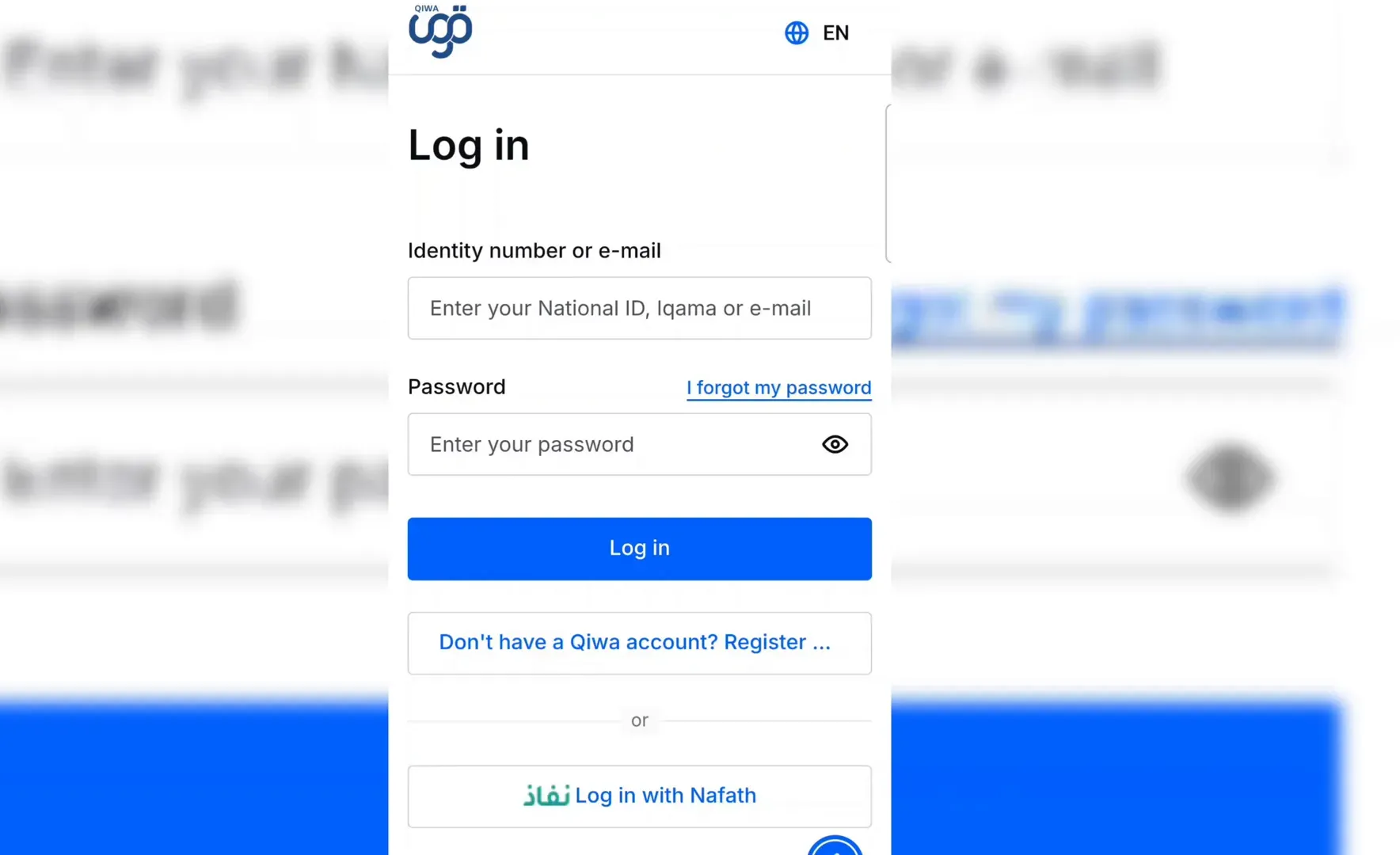
First things first, you need to log into the Qiwa platform online. Here’s how:
- Go to the Qiwa portal and enter your password to log in.
- Alternatively, use the Nafath platform (linked to your iqama) for an easier login.
- Enter your iqama number and the verification code sent to your phone.
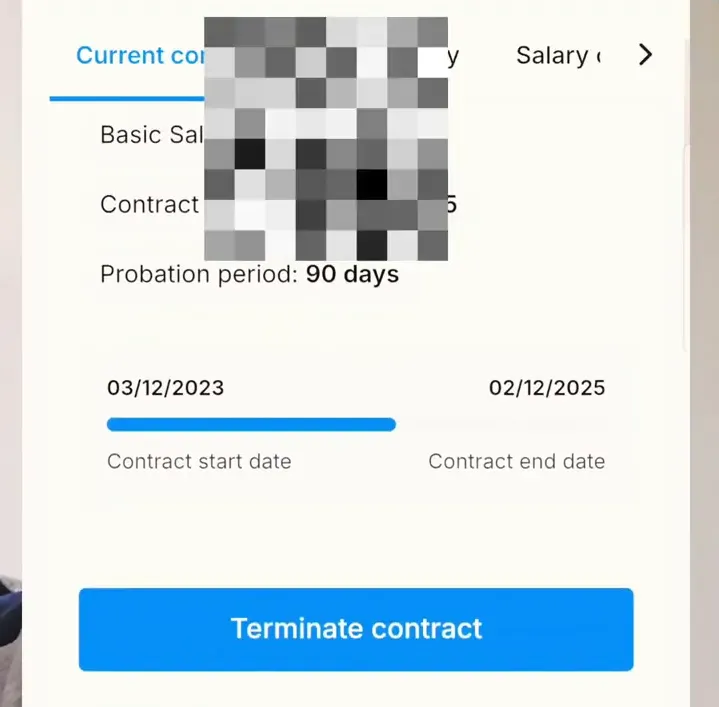
- Once logged in, access your individual account to view your current job details and contract status.
This is where you can see your active contract(s) and decide which one you want to terminate. For example, my contract was valid until February 2025, but I wanted to end it early.
📋 Step 2: Selecting the Contract Termination Reason
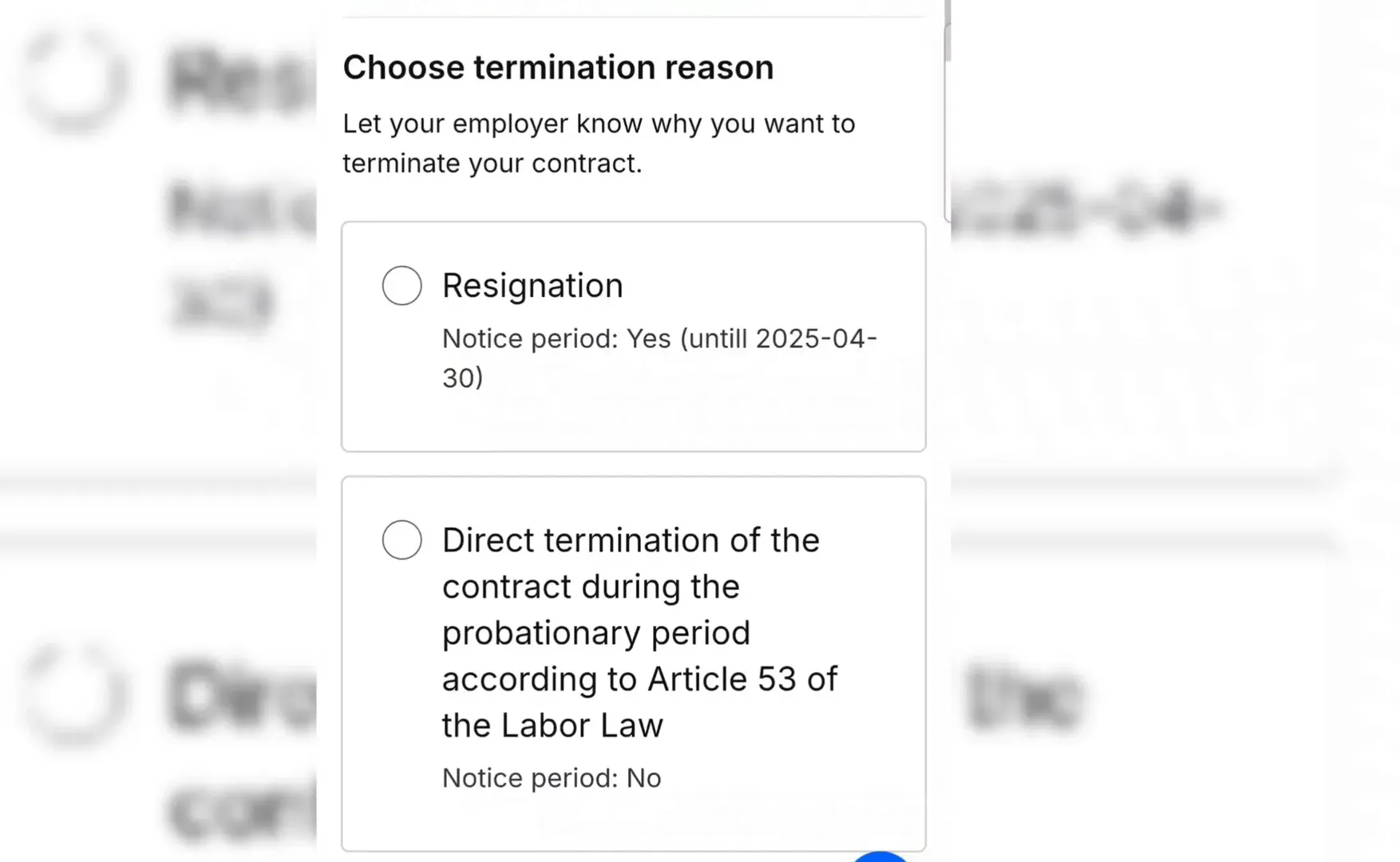
Once you select “Terminate Contract,” you must choose a valid reason for termination according to Saudi labor law. The main recognized reasons include:
- Resignation: Under the Labor Law amendments in force since 19 February 2025, a worker ending an open-ended contract must give at least 30 days’ written notice (Article 75). On a fixed-term contract, a resignation is treated as accepted if the employer does not respond within 30 days, and the employer can postpone acceptance by up to 60 days if work needs require it, with written reasons (Article 79 bis).
- Direct Termination During Probation: Under Article 53, either party can end the contract during the probation period. Since February 2025 the probation period can be up to 180 days in total, and it must be written in the contract. Being on probation does not by itself let you transfer to another employer without your current employer’s consent (see “Switching Employers or Sponsors” below).
- Mutual Agreement: Under Article 74, the contract ends if both you and your employer agree. The employer’s consent is required, and Qiwa lists this among the reasons where the notice period has to be completed.
- Contract Expiry: A fixed-term contract ends when its term runs out; Qiwa lists this among the reasons where the notice period in your contract applies. Once your documented contract has ended, you can move to a new employer without your current employer’s consent.
- Worker Retirement: Article 74 covers retirement cases where no notice period is required.
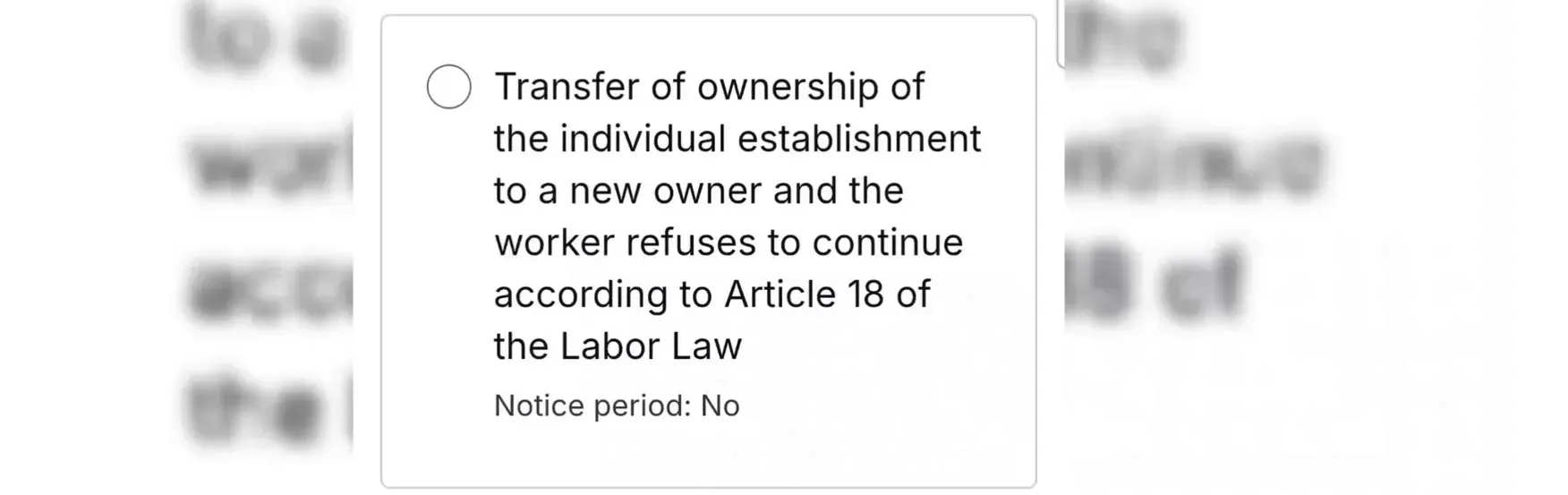
- Transfer of Ownership: Under Article 18, if the establishment changes owner or legal form, employment contracts stay in force with the new owner. For individually owned establishments, the old and new owner can move the worker’s earlier rights to the new owner only with the worker’s written consent; a worker who does not consent can ask to end the contract and receive their dues from the previous owner.
- Death of Employer: Under Article 79, the contract does not end just because the employer dies, unless the employer’s person was the basis of the contract. Qiwa lists “business owner’s death” as a termination reason for such cases.
It’s important to select the correct reason to avoid legal trouble or fines.
⚠️What Happens If You Terminate Contract Without a Valid Reason?
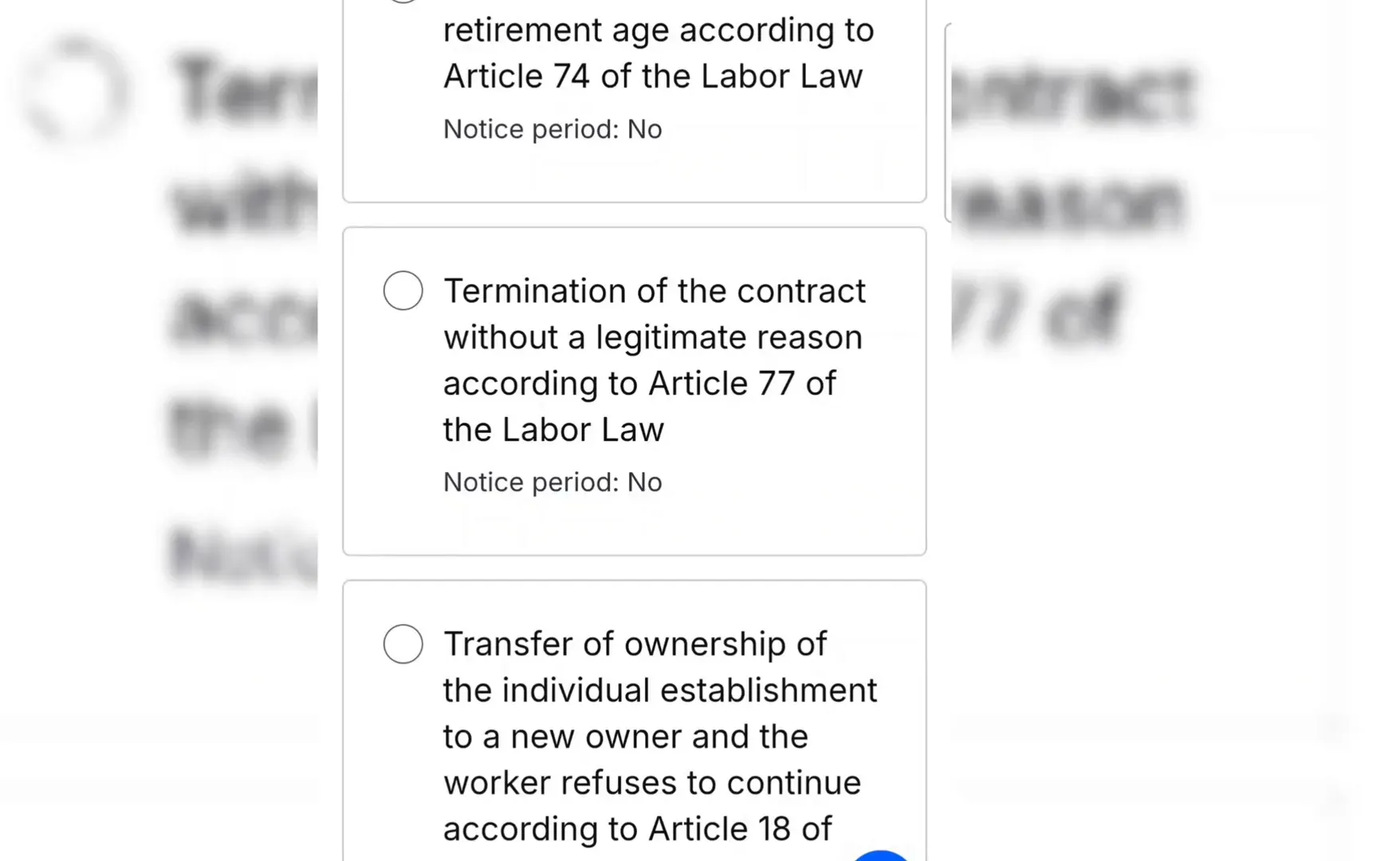
Terminating your contract without a legitimate reason can be risky. According to Article 77 of the Saudi labor law:
- The other party (here, your employer) can claim compensation: for a fixed-term contract, the wage for the rest of the contract term; for an open-ended contract, 15 days’ wage for each year of service. Either way it cannot be less than two months’ wage, unless the contract sets its own amount.
- For example, if six months remain on your fixed-term contract and your salary is 5,000 SAR, the claim could be up to 30,000 SAR.
- It can also lead to a labor dispute with your employer.
Companies often have legal teams to pursue these claims, so it’s best to avoid this scenario by choosing a valid termination reason.
🔄 Switching Employers or Sponsors
If you want to move to a different company or sponsor, there are special provisions:
- Transfer without your employer’s consent: Under the Labor Reform Initiative (in force since March 2021), you can move to a new employer through Qiwa without your current employer’s consent once your documented contract has ended, or during the contract after you have completed 12 months since entering Saudi Arabia and serve the notice period (the one in your contract, or 90 days if there is no documented contract). Other exceptions include wages unpaid for three consecutive months and an expired work permit or iqama.
- Mutual agreement: Your current employer can release you willingly, subject to the notice period.
- Contract expiry: Once your documented contract ends, you can transfer without your employer’s consent.
- Ownership transfer: If the establishment changes owner, your contract continues with the new owner; for individually owned establishments you can refuse to have your rights moved and instead end the contract and collect your dues from the previous owner.
These options make it easier for workers to change jobs in Saudi Arabia’s evolving labor market.
✋ How to Terminate Your Contract Without Notice Period (Article 81) 🛑
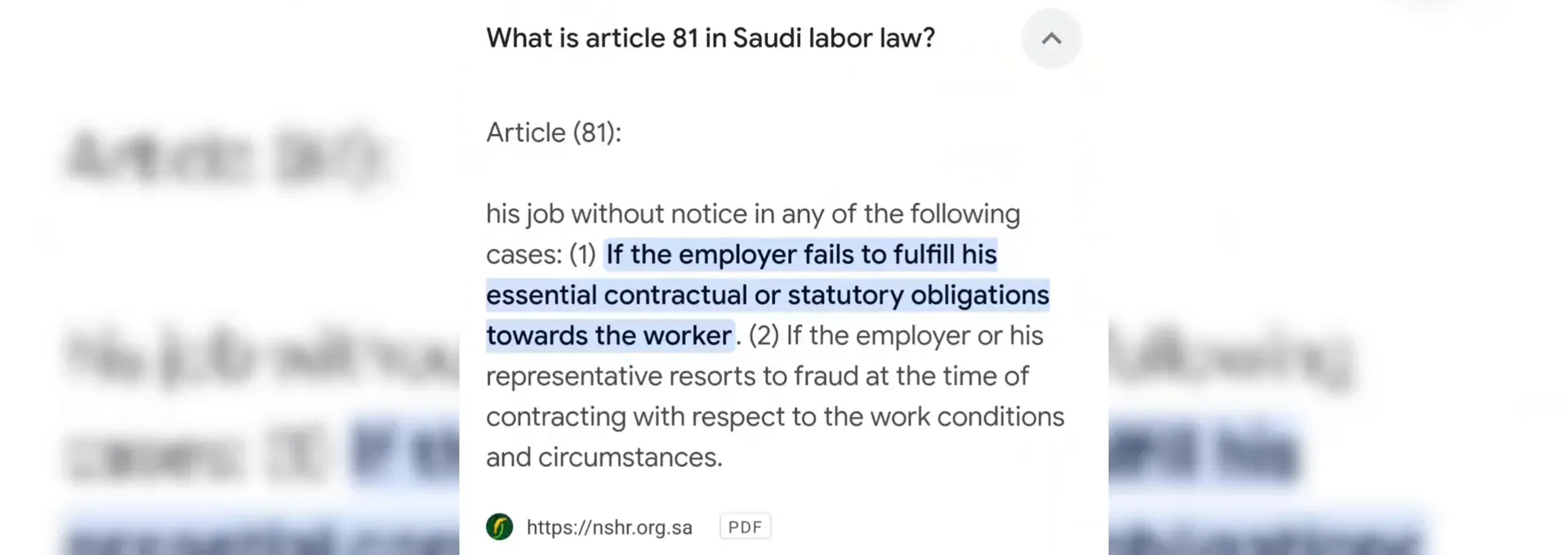
One of the most important protections for employees is Article 81 of the Saudi labor law, which allows direct termination by the worker without any notice period or penalties under specific conditions. These include situations where the employer:
- Fails to fulfill essential contract obligations, such as not paying full salary.
- Assigns tasks that differ significantly from the contract (e.g., hired as a mason but made to work as a low-skilled electrician).
- Violates labor rights or mistreats employees.
Under Article 81, you can leave immediately while keeping all your statutory rights. Moving to a new employer still goes through Qiwa’s transfer rules. This is a significant advancement in protecting workers’ rights in Saudi Arabia.
ℹ️ According to Saudi labor regulations, this article empowers employees to defend themselves against unfair treatment by employers, who often have more resources and legal support.
❓ Frequently Asked Questions (FAQ)
Can I terminate my Qiwa contract without giving any notice period?
Yes, under Article 81 of Saudi labor law, if your employer fails to fulfill contract terms or mistreats you, you can terminate without notice or penalty.
What happens if I resign without a notice period?
If you end an open-ended contract without serving the notice period, you may have to pay your employer the wage for the notice period (Article 76), and ending a fixed-term contract without a valid reason can lead to a compensation claim under Article 77. Give at least 30 days’ notice or use a valid termination reason.
Can I transfer to another company during the probation period?
Not automatically. During your first 12 months after entering Saudi Arabia, a transfer generally needs your current employer’s consent, unless an exception applies (for example, wages unpaid for three consecutive months, an expired work permit or iqama, or no documented contract).
Is mutual agreement termination always possible?
Yes, if your employer agrees. It requires employer consent, and Qiwa applies the notice period.
How do I log in to the Qiwa platform?
You can log in using your password or via the Nafath platform linked to your iqama number and verification code.
🔚 Conclusion: Know Your Rights and Take Control of Your Qiwa Contract
Saudi Arabia’s updated labor laws and the Qiwa platform provide employees with more flexibility and protections than ever before. Whether you want to resign, switch jobs, or terminate your contract due to employer violations, understanding your legal options is key.
Remember to use the official platforms, select the appropriate termination reason, and leverage Article 81 protections if your employer is violating your rights. This way, you can avoid fines, penalties, and stressful legal battles.
Stay informed, stay empowered, and share this guide with friends and colleagues who might benefit from it.
Thank you for reading, and all the best in your career journey in Saudi Arabia!
- qiwa
- saudi-labor-law