 Indian in Saudi Arabia
· indianinsaudi · about-kingdom · 5 min read
Saudi Citizenship for Indians, Expats and Foreigners: Full guide
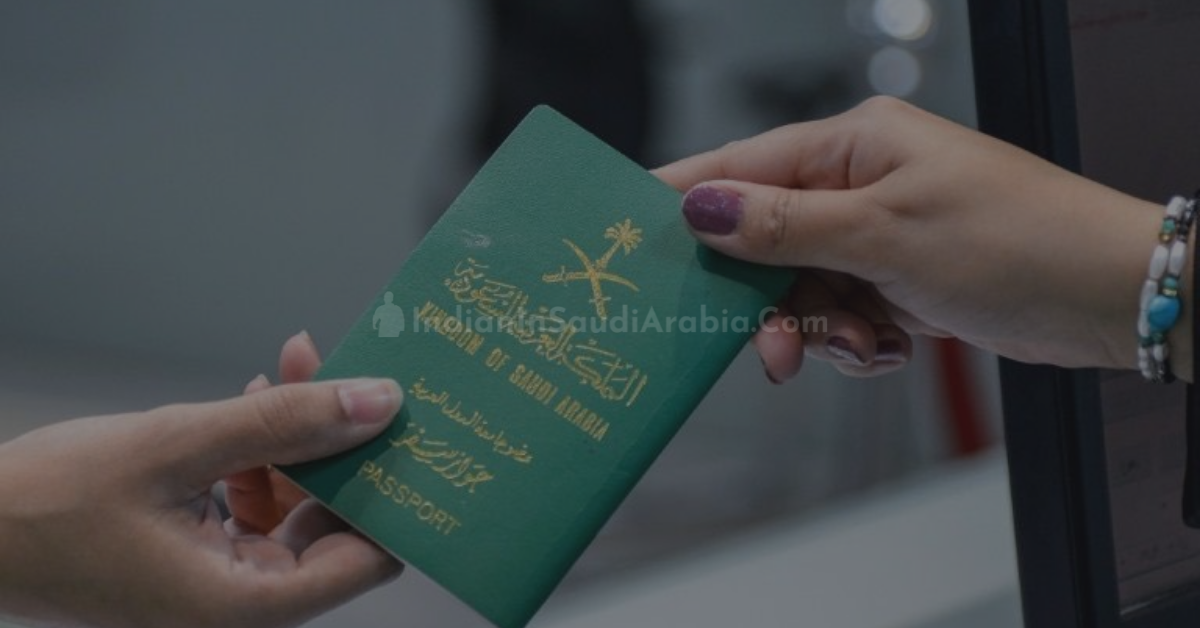
Citizenship in Saudi Arabia is governed by the Saudi Arabian Nationality Law. Unless you were born to a Saudi father (or, in some cases, a Saudi mother), getting Saudi citizenship is a challenging task. Being born in the Kingdom to expatriate parents does not make you a citizen, and foreigners are rarely granted citizenship. Still, in this article we’ve outlined the ways Indians and other expats can obtain Saudi citizenship.
Advantages of Saudi Citizenship for Foreigners
Living in Saudi Arabia as an expat can be a wonderful experience, but Saudi citizenship has a number of advantages. Some of them are:
- Saudi citizens have visa-free, visa-on-arrival or eTA access to about 90 countries and territories (Henley Passport Index, 2026)
- Saudi nationals are given job precedence over non-Saudis (Saudization/Nitaqat)
- Saudi citizens do not need a visa to travel to other GCC countries and can live and work there
- Saudi nationals in employment are covered by the national pension system (GOSI), which pays a pension on retirement once the contribution conditions are met
- Saudi nationals get free public education and healthcare
- Saudi citizens don’t pay the expat dependent fees
- Under the Citizen Account Programme, eligible low- and middle-income Saudi families receive monthly financial support from the government
- Saudi citizens can apply for interest-free social financing (for example from the Social Development Bank) to overcome financial difficulties
How to obtain Saudi Citizenship for expats?
There are three main ways to get Saudi citizenship, provided the applicant meets the government’s requirements.
1. Saudi Citizenship by birth or by descent
Expats cannot get Saudi citizenship just because they were born in the country. Citizenship is granted to newborns in these cases:
- Child born to a Saudi father (inside or outside the Kingdom) = Saudi citizenship by birth
- Child born to a Saudi mother and a father of unknown nationality or a stateless father = Saudi citizenship by birth
- Child born to a non-Saudi father and a Saudi mother = may choose Saudi citizenship on reaching the age of maturity, if of good conduct, with no conviction for a criminal offence or imprisonment for a moral offence of more than six months, and familiar with Arabic
2. Saudi Citizenship by naturalization
Naturalization based on 33 Points System
Expats who have lived in Saudi Arabia for at least ten consecutive years on a regular residency permit, and who work in a profession the country needs, can apply for naturalization. The application is assessed on a 33-point system.
A committee recommends that an application continues only if the applicant scores at least 23 of the 33 points. Applicants must also have entered the Kingdom legally, hold a valid passport and earn their income legitimately.
| Saudi Citizenship Criteria Description | Points Allocated |
|---|---|
| Residence | |
| Residence of minimum 10 consecutive years in Saudi Arabia | 10 |
| Profession (only one qualification counts, max 13) | |
| Doctorate degree in medicine or engineering | 13 |
| Doctorate degree in other sciences | 10 |
| Master’s degree | 8 |
| Bachelor’s degree | 5 |
| Family ties (max 10) | |
| Father is Saudi | 3 |
| Mother and her father are Saudi | 3 |
| Only the mother is Saudi | 2 |
| Wife and her father are Saudi | 3 |
| Only the wife is Saudi | 1 |
| Saudi children and siblings: two or fewer | 1 |
| Saudi children and siblings: more than two | 2 |
Saudi Citizenship 33 Points System (source: National Portal, my.gov.sa)
Citizenship for Talented & Highly Skilled Expats
- In 2021, Saudi Arabia approved granting citizenship to a select number of expatriates with distinguished talents, unique expertise and specialized skills.
- This covers specialists in fields such as law, medicine, science, technology, culture and sport.
- Candidates are chosen through nomination. You cannot apply for this route yourself.
Recommended: 6 Facts about Saudi Arabia that you need to know
3. Saudi Citizenship by Marriage
- Expat Wife of a Saudi Man: a foreign woman married to a Saudi man can be granted citizenship if she applies and declares before a notary that she gives up her original nationality. She must prove a legal marriage (made in line with the rules for Saudis marrying foreigners), live in the Kingdom and have no criminal record. The marriage must normally have lasted at least 5 years, with shorter periods accepted in some cases, for example if she has children.
- Expat Widow of a Saudi Man: citizenship can be granted to the foreign widow of a Saudi if she applies, gives up her original nationality, does not remarry after her husband’s death, lives in the Kingdom and has one or more children who have reached, or are close to, the age of maturity.
Is Dual Citizenship possible in Saudi Arabia and in India?
- Saudi Arabia does not allow dual citizenship without permission. A Saudi citizen who takes a foreign nationality without the approval of the Interior Ministry can lose Saudi citizenship.
- India does not allow dual citizenship either. Under Article 9 of the Constitution and Section 9 of the Citizenship Act, 1955, an Indian who voluntarily acquires another country’s citizenship stops being an Indian citizen. Former Indian citizens can apply for an OCI card, which is not citizenship.
How does one lose their Saudi Citizenship?
- Voluntary: the law allows a Saudi citizen to give up Saudi citizenship. Contact the authorities for the required documents.
- Involuntary: the main reasons for losing Saudi citizenship involuntarily are
- A person takes up the citizenship of another country without permission.
- Naturalization was obtained by deception or fraud.
- A citizen serves in the military of a foreign government without the authorization of the Saudi government.
- A citizen works for a foreign government that is at war with Saudi Arabia.
Sources